
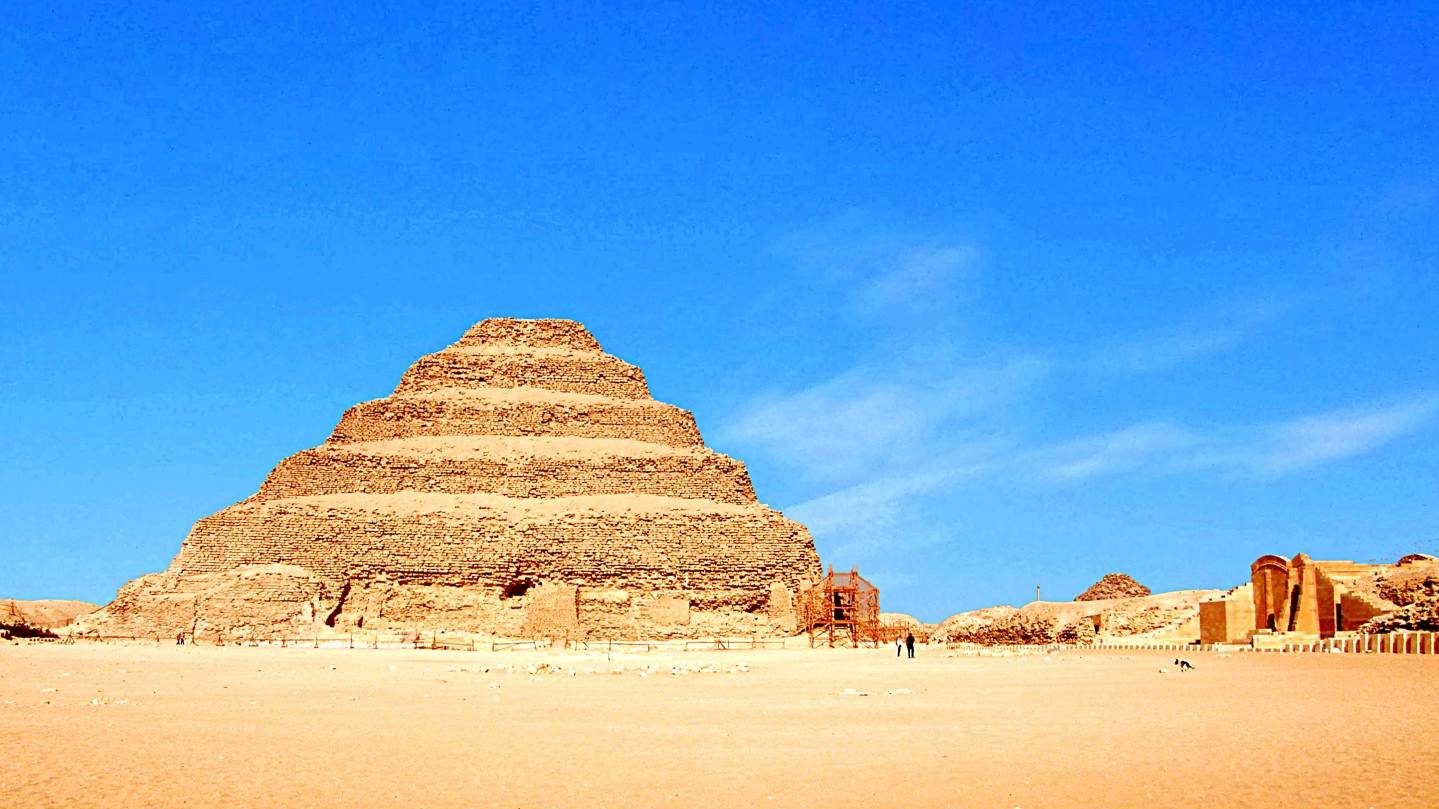
The Saqqara Pyramid, also known as the Step Pyramid of Djoser, is one of the most significant archaeological sites in Egypt. It's located in the Saqqara necropolis, which is around 30 kilometers south of Cairo. Built during the 27th century BCE, it's considered the earliest colossal stone building and the first pyramid ever constructed.
Designed by the architect Imhotep for Pharaoh Djoser of the Third Dynasty, the pyramid was originally a mastaba, a flat-roofed rectangular structure. Imhotep added additional mastabas on top of each other, creating the step-like structure that gives the pyramid its distinctive appearance. This innovative design laid the groundwork for the development of the true pyramid form seen in later Egyptian pyramids.
The complex surrounding the Step Pyramid includes various structures such as courtyards, temples, and smaller pyramids for members of Djoser's family. The site underwent numerous renovations and expansions over time, reflecting its importance in ancient Egyptian religious and funerary practices.
Today, Saqqara is a UNESCO World Heritage Site and continues to be an important area of study for archaeologists and Egyptologists, providing valuable insights into ancient Egyptian architecture, culture, and beliefs.